Composed for all of my spiritual directees, I share this here with you.
Friends,
Image: Captivity Collage by Lili Masci
As we enter into these sacred days, marking Jesus’ last supper, his passion, death, and resurrection, I carry each of you — your life circumstances — in my heart.
A phrase from today’s morning scripture is one I lift with you, and the larger world, in mind.
From the prophet Isaiah, to Jesus, repeating these words before his community in Nazareth:
“God has sent me to proclaim liberty to captives.”
Isaiah 61:1; Luke 4:18
I share these words as I contemplate the myriad of ways we feel trapped or held back, bound by a sense of limited time, false identity narratives, shame, grief, a sense of scarce resources, or any physical diminishments…
We have a God who enters into it all, and proclaims freedom. For this, I give thanks, and I lean into Love’s promises for each of us and the world over.
You are held in prayer and treasured this day and always.
I took a walk with Mike Jones this morning. It’s the second day of spring and the frozen muck of the winter is melting underfoot. All that has been buried under the depth of snow is emerging. Tethered to my small pooch, I consciously maneuver on the thawing ground, mindful of spots that are slick with ice that froze again overnight after yesterday’s thaw.
On one hand, the walk is slightly treacherous. Mike Jones is excited and pulls ahead hard on his leash, ready to take off. I’m nervous, uncertain that his strain might topple me as I mind my footing. On the other hand, the walk is exhilarating. Look at the season as it shifts! This glorious thaw that reveals all that is underneath, all that is making way for new life to emerge! Spotting sections of the path that are moisture and ice-free, I find traction in my step, and take off with Mike. We are bounding forward together! One sure stride after another. It’s exhilarating! Spring is here!
My walk takes me to Lent. To my prayer around vulnerability, to God’s invitation to me to be open. To take note. To see what is in my path and remove any barriers to love.
This terrain of treachery and exhilarating opportunity is like my heart these days. I have just come through a tumultuous fall of wild uncertainty and angst in my life. I have navigated profound issues in my work and family. I have found the sure-footing of God’s presence and my faith-filled recovery journey.
Peter comes to mind. I’m in week three of the Ignatian Exercises and Jesus has just been arrested. The faithful friend and apostle to Christ is angst-ridden and making his first statement of denial.
Walking this morning, noticing the tightening of my leg muscles as I traverse a slick spot on the sidewalk, my heart goes to Peter. Is this seizing in my legs like Peter’s fear when he was asked if he was an associate of Jesus’? Compassion and alignment well within me as I identify the way my doubt and denial of God puts me on my own slippery path. I’m so grateful for this morning’s meditation and the opportunity to draw connections between the natural world, my spiritual experience and this sacred season of Lent.
As you make way in your own spring walks, what slippery spots do you note? Where is the path wide open and inviting you to run? What anchoring do you claim beneath your feet? What solid ground do you identify as the thaw exposes your winter’s trek?
Lazarus is dead. His sisters Mary and Martha are grieving. Jesus arrives. Martha expresses her faith in him. Jesus is moved. Jesus weeps. He asks that the stone is taken away.
Brene Brown: TEDx Houston
I’ve been meditating a lot with Brene Brown’s work on vulnerability. Her original TED Talk in Houston resurfaced in my media feed over the weekend, and I was compelled to listen anew to her words.
Between Brene Brown and Jesus, I heard the invitation: Open your heart. Check what blocks you. Be courageous in your vulnerability. Trust that you are enough.
Honestly. What’s more vulnerable-inducing than to open up your heart, mind, being to another’s love or judgement?
When Jesus came to Bethany, Lazarus had been dead for four days. Dead for four days. Decomposing. No blood flow. Zero oxygen circulating. Lazarus’ own sister says, “But Lord, by this time there is a bad odor, for he has been there for four days.”
When we choose to open ourselves up and practice vulnerability, we open ourselves up to that which can, figuratively, “smell bad.’ We take a risk to expose the parts of ourselves that perhaps haven’t had much light, attention, blood flow, or oxygen.
We take a risk to let Love in and be fully alive.
This Lent, I’m entering into a two fold spiritual practice. One, I’m identifying my stones. And two, I’m listening to how Brene Brown’s work inspires my courage in opening. To Love. Trust God. Be resilient. Step into my identity as a wholehearted woman worthy of love and belonging.
Opening to White Fragility and Spiritual Listening
Everywhere I go these days, I’m conscious of Whiteness. In other words, I’m aware of my skin color –and the layers of constructed social identity that go with Being White. I recognize a persistent desire to understand: All. Other. Perspectives.
Listening as Spiritual Practice
I’m awkwardly and increasingly aware of an orientation in the world that’s rooted in assumptions I hold about how the world works — based on my white experiences, and a history of white supremacy in the United States. I wonder constantly about what I don’t know to be true and real for others — because of their skin color and lived experiences — and our larger (unexamined) history.
‘The human condition is one about belonging. We simply cannot thrive unless we are in relationship.’
I see the multihued pigmentations of people all around me, and it opens me wide in my deep desire to connect and claim belonging to this gorgeous family God has created. Pink and peach and peanut butter brown and mocha and dark cocoa colors come into my mind’s eye and delight my heart.
I wish delighting in skin color was as simple as that: delighting in God’s design. But I know: It’s. Not. That. Simple. Staying with delight doesn’t go far enough in getting at what separates and perpetuates our mostly monochromatic bubbles and the injustices that persist because of racism. I feel a spiritual call to burst things open. I feel a pressing need to inhabit spaces where conscious conversations are had about race and belonging.
Breaking Bread Together: A Civil Conversations Project Dinner Invite
Breading Bread: An Invitation to Break Open
I turned 50 this year and had a dinner party for 12 women. And around that first table of curated female friends from different facets of my life, I experienced a call to convene another set of friends. And then another. And yet another. At each table, I’ve invited stories as a response to a larger, philosophical question. Inside of these ritualistic experiences of breaking bread, I recognize our common human desire to break open something larger in ourselves as we celebrate life and grow together as community.
I write about this here as part of my conscious collaboration with community in co-creating a reality that embraces our true belonging to one another. Dr. Martin Luther King, Jr called this kingdom-living realization the “Beloved Community.”
Perhaps you share this desire to engage in bread-breaking and heart-opening toward these goals of claiming our oneness?
I invite your prayers and participation in this experiment of civil dialogue and community engagement. Will you join me?
I think it was December of 1999 when I encountered my first Mary Oliver poem.
Tucked inside photocopied handouts, staff memos, returned detention sheets from the guidance counselors, was a handwritten copy of Wild Geese. My mail box at North High School was seldom a place that I found inspiration. But on this particular day – leading up to our Winter Break — I received the gift of a poem with a simple message: Merry Christmas, Love, Ellen.
Twenty year later, that memory brings tears to my eyes.
What a gift a poem is. What a gift Oliver offered us –with her close and simple look at the world around — announcing and affirming our perspectives and proximity to all that lives and breathes and has its way with us.
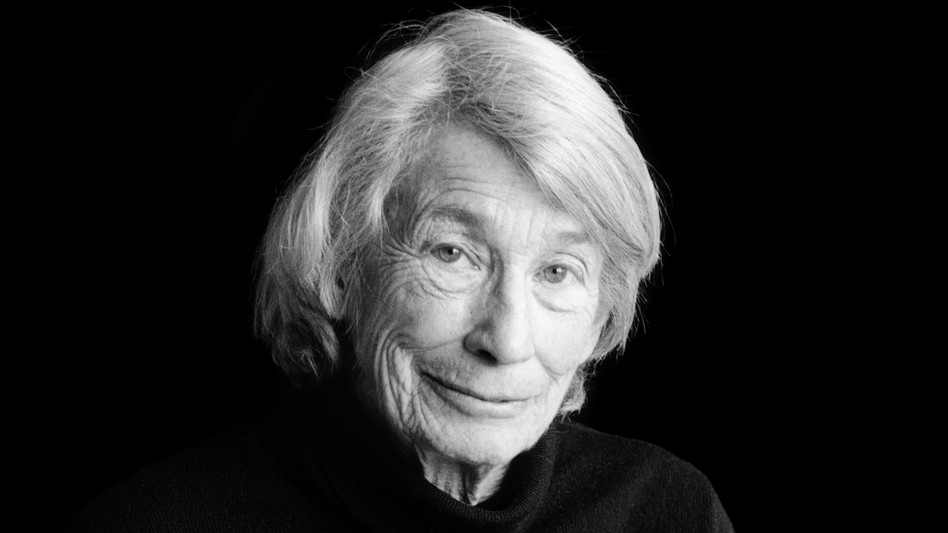
On this occasion of Mary Oliver’s death, I am celebrating the way her poetry arrived in my life and has touched me.
It was on a brownish-gold sheet of cotton fiber paper that my friend and mentor, Ellen Debe, copied Mary Oliver’s poem and presented it as a Christmas card, tucked inside a matching envelope. I can still see it: the words in black ink, Ellen’s marked handwriting, the loops of the l’ and curved n’s and m’s and pregnant s’s.
“You do not have to be good.”
Receiving a poem is an intimate gift.
I remember opening the envelope and reading the poem at my desk. Almost instantly, Oliver’s words made me cry.
“You do not have to crawl on your knees through the desert. You only have to let the soft animal of your body love what it loves.”
I was in my first year teaching “Writing as Performance” –a creative writing class that made space for -and celebrated – the student’s unique voices and poetic perspectives. I had stepped wobbly into the shoes of Ellen Debe, the teacher who lead this class for years prior. It seemed only fitting that I would share the poem as part of the curriculum, a writing prompt for that day.
Shaina Wilburn sat a round table at the back of the class, hunched over her journal, in close proximity to the other new freshman writers in the course. When I read Oliver’s words aloud, my voice catching on the lines about belly, knees, and my place in the family of things, it was Shaina who said, “Wow. She really knows you.”
In hindsight, I’m not sure if she was talking about my friend Ellen or the poet, Mary Oliver. Either way, I agree. She does really know me.
***
What is your favorite Mary Oliver poem? What lines might you be called to gift to another this day?
Wild Geese by Mary Oliver
You do not have to be good. You do not have to walk on your knees for a hundred miles through the desert repenting. You only have to let the soft animal of your body love what it loves. Tell me about despair, yours, and I will tell you mine.
Meanwhile the world goes on.
Meanwhile the sun and the clear pebbles of the rain are moving across the landscapes, over the prairies and the deep trees, the mountains and the rivers. Meanwhile the wild geese, high in the clean blue air, are heading home again.
Whoever you are, no matter how lonely, the world offers itself to your imagination, calls to you like the wild geese, harsh and exciting — over and over announcing your place in the family of things.
My deepest vocation is to be a witness to the glimpses of God I have been allowed to catch. — Henri Nouwen
Happy New Year!
It’s been over a year since I sat to compose a blog post for this website.
In the days to come, I look forward to reflecting on the way I have known my vocation to have expanded and taken on the nuanced turns that only Love can allow. I look forward to unpacking what buying a bakery with my husband brought forward in fruitful and challenging ways. I am excited to elaborate on how my days at the farmer’s market opened up the proximal ways I know God’s love and abundance — in real, visceral, and inspiring ways. I’m equally enthusiastic about identifying here what turning 50 has meant in my commitment to live engaged with community –and ever present to sacramental realities in daily ritual. Oh! And I’d be remiss if I didn’t pause to consider and unpack the ways co-facilitating the Ignatian Exercises at Loyola Spirituality Center has had on how I show up in my everyday life.
A look back at my transition from Visitation Social Media Specialist to Spiritual Director and Bakery Owner….
In December of 2017, I handed the social media position I held for 7 years off to another Companion to the Visitation Sisters of Minneapolis. As I reflect on my embrace of contemplative writing and action in the world, I lift this experience and share here. What a blessed journey I have known as a Visitation Companion!
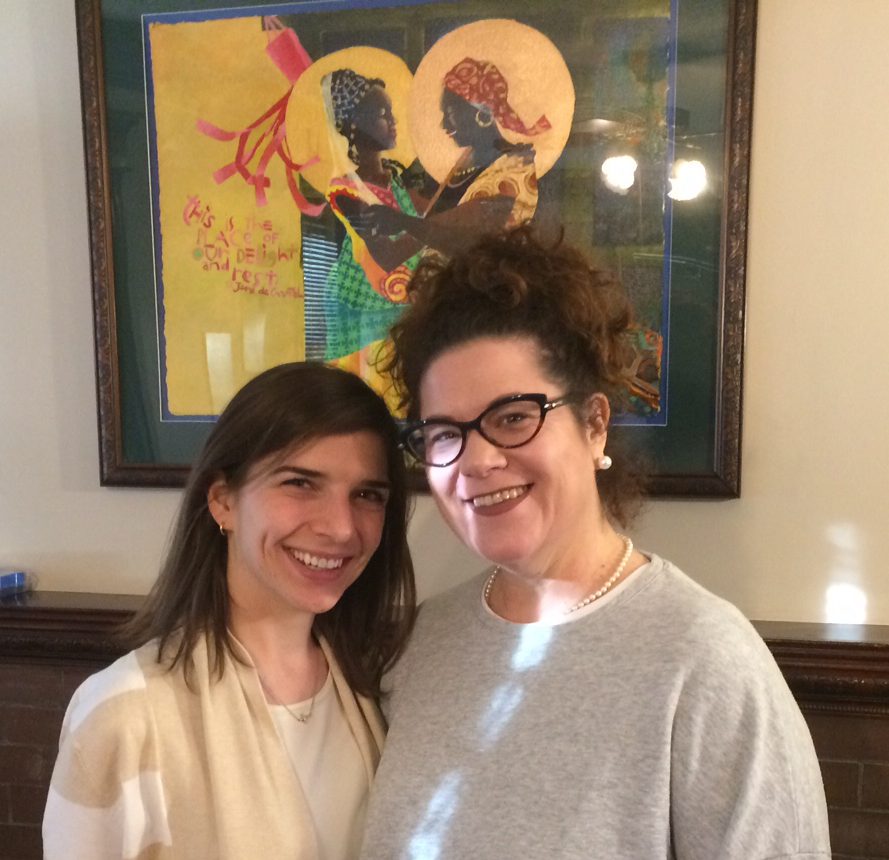
Anna Dourgarian and Melissa Borgmann-Kiemde, Visitation Companions
I took a pitchfork and shovel to my compost bin today. Do you know the deep satisfaction there is in turning over the bits of apple core, banana peel, onion skin, and egg shell that have become this deep, rich, organic material? Looking at the transformation of what was once discarded waste, now meant to nurture new life, makes me happy.
And so it is with my recovery journey. From the ugliest, turn-away-from, discarded moments of my life, comes this rich material meant to inform and nurture my present and future.
A year ago today I walked into my first Codependents Anonymous meeting. I was in crisis. As step 1 says, “my life had become unmanageable.” I was filled with rage and sorrow. I had all sorts of reasons that my life was falling apart. And most of them had to do with the actions of other people. I saw myself as a victim. A sorry, well-intentioned mom, wife, woman.
I don’t write much of my 12 step journey seeking freedom, peace, right relationship and living into recovery. But today, on my 1 year anniversary, I want to celebrate this path of well being, of boundaries, of self-love, and seeing strength, power and capability in all beings.
I celebrate a new found order in my faith and priorities, recognizing God is in charge, and a higher power who really loves me. I recognize and claim a life of unfolding graces and abundant gifts. I celebrate a new found sense of efficacy, agency. I can see my woundedness, my faults, triggers, and recognize this sight, and the wounds themselves, as gifts. They are areas where I most cling and lean into God — and find hope.
The Yanez Verdict
Pioneer Press: June 16, 2017
On this day that a larger community of friends and strangers grieves what feels to be an unjust verdict in the case of Officer Yanez killing Philando Castile, I can also point to my recovery journey as one small, but significant thing I’m doing to address racism and the false narrative of racial difference. I cannot bring back Philando Castile. I cannot alleviate the haunted, hunted nature of Jeronimo Yanez in his “freed” acquitted stance. But I can work to address the underlying issues of violence in our culture that keep us all captive. I can look at my own desire to be all-powerful, in charge and control others behavior, as part of the root problem in our White-dominated institutions and settling of this nation. I can also humbly ask God to remove these defects of character in myself, and in others, and move to make amends.
This is my path. This is my prayer. This is my form of penance. I appreciate your presence alongside me on this journey.
Coffee mug in one hand, my mini-poodle/ brussels griffon pooch tugging on his leash wrapped around the other, I was still wearing my pajama pants when I encountered my neighbor at 7am Sunday morning on Selby Avenue.
I recognized Mary from down the street. Activist Mary, Landscape-architect Mary. Her profile picture from Facebook immediately popped into my mind — followed by images of her perennial garden, flagstone retaining wall and Black Lives Matter lawn sign.
We crossed Selby Avenue and greeted one another. Standing at the corner of Griggs, our dogs Sophie and Mike Jones circled and sniffed one another out while Mary and I visited.
For 20 minutes, we talked about art and activism. She brought up Ta Nehisi Coates’ book; (did you know it was being staged at the Apollo Theater?) We revisited her desire to commission a graffiti artist to paint a mural on her garage door. (I asked if she got my Facebook referral.) She told me about being arrested at the mansion last summer after Philando Castile was murdered. (My six year old and I rode our bikes there and greeted protestors before the mass arrests began.) We talked about what it means to have access to a good lawyer, including the resources to pay for one, before parting ways.
We were two white women coming alive with our shared passion for racial justice and the arts. We were decedents of European immigrants talking about what it means to live in solidarity with others. We were neighbors who believe in the power of protesting injustice and celebrating beauty.
Who is Carrying Christ to You?
Anne Williams leads Visitation Companion Retreat
I’ve spent the better part of the last 13 years unpacking and applying the Visitation narrative to my life. Seeing Mary and Elizabeth. Being Mary and Elizabeth. As a Companion to the Visitation Sisters of Minneapolis, a 17th century religious Order named after Luke’s gospel story, I have dwelled in this scripture and sought to recognize the dynamic relational encounter between Jesus and John the Baptist’s moms within the framework and circumstances of my everyday life.
On Saturday, May 6, I was surprised at the invitation to reflect anew on this text while on retreat at the monastery.
“Who has been Mary for you?” she asked, “In other words: Who has carried Christ to you?” and “Who has been Elizabeth for you? Or, who has seen Christ in you?”
For the first time, Mary appeared in my imagination not as a gentle bearer of Jesus, but rather, a courageous feminine figure bringing forth a divine life who would disrupt the status quo. Not only was she carrying God incarnate, she was singing a song of praise and justice in the naming of this new life.
” the Mighty One has done great things for me, and holy is his name. He has brought down the powerful from their thrones, and lifted up the lowly; he has filled the hungry with good things, and sent the rich away empty.” –Luke 1:49; 52-53
I saw my neighbor bringing Jesus. Not the peace-loving, virtue-wielding wonder of God, but a disruptive Christ — one arriving as a necessary agent of change for the world as we know it.
And the surprise tickled me.
Mary’s Song as Protest Anthem?
AFP/Getty Images by Daniel Leal-Olivas
While Mary and Elizabeth have often shown up in radical other forms – as a man (instead of a woman); a child (rather than mature teen and/or elder); as gay (rather than heterosexual); as Black (vs. middle eastern “white”); or undocumented (rather than an assumed “legal” resident), I’d not entertained the child within each pregnant woman’s body presenting itself, per se, or how the babe would appear. “Who is carrying Christ to me, and how is Love revealing itself?” I wondered. Good questions!
And, while my previously unpacked Visitation encounters have contained tidings of mutual hope and promise — a choral resounding of the magnificat in something akin to the words: “We are in this together. Alleluia to the Incarnation!” I’d never thought of Mary’s song as a protest anthem.
Not until Anne posed her questions, did the question of Love being revealed so dramatically alter and entertain my imagination.
My neighbor as Mary, mother of God, took my breath away. Mary as protestor.Mary as bearing a Divine disruption.
Neither of us was pregnant. We were two mid-life white women walking our dogs on Sunday morning. And yet in the contemplation of this encounter, the Visitation expands; I am opened to the next evolution of Jesus in our midst.
Who is bearing Christ to you this day? How is Mary or Elizabeth showing up in your world, on your street, at the intersection across from your home?